Street-Level Intel: What Istanbul's Cabbies Know That the Beltway Doesn't
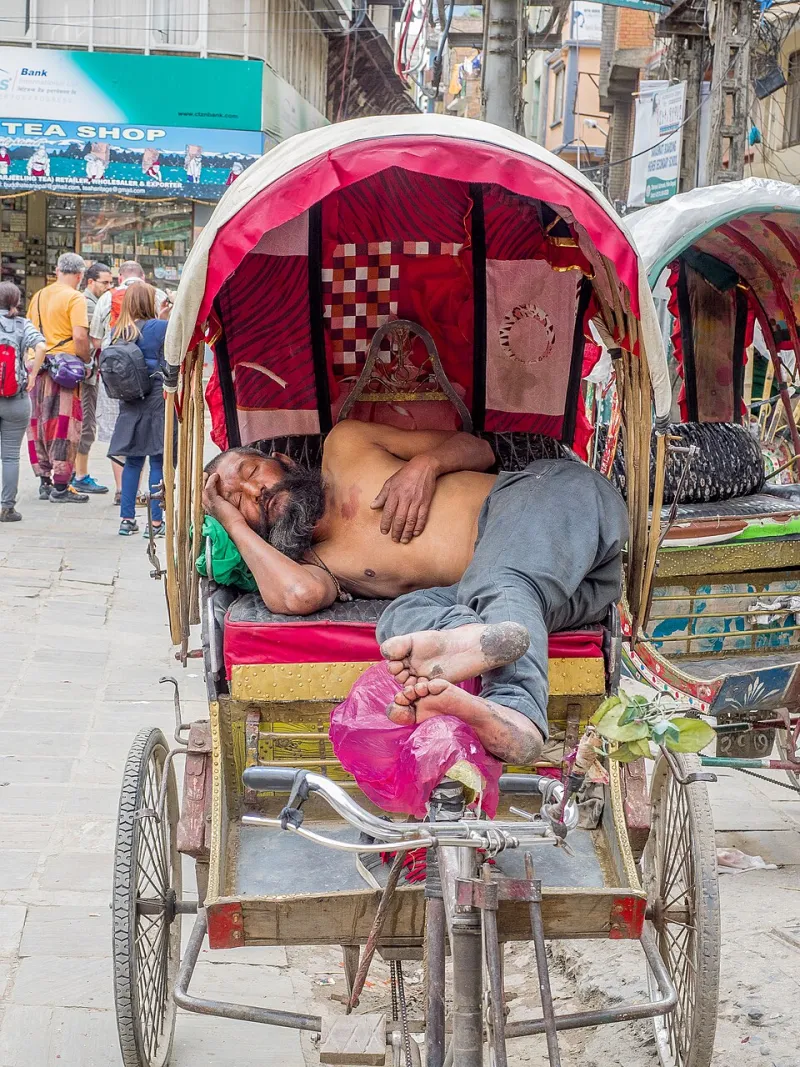
Photo: Esin Üstün from Istanbul, Turkey, CC BY 2.0, via Wikimedia Commons
There's a running joke among foreign correspondents who cover Turkey: if you want to know where the country is headed politically, skip the think-tank briefings and hail a cab. Spend twenty minutes in Taksim traffic with a driver named Mehmet or Hüseyin, and you'll walk away with a more honest read on Erdoğan's standing than you'd get from three hours of panel discussions in Washington.
That's not a knock on the analysts. It's a recognition that Turkish politics, like most politics, is ultimately a story about kitchen-table economics — and nobody feels that story in real time quite like the guy working a twelve-hour shift in a beat-up Fiat, watching his fuel costs eat through whatever the fare meter just gave him.
So consider this your field guide. A practical, no-nonsense breakdown of how to use street-level observation — the kind that doesn't require a security clearance or a subscription to a geopolitical intelligence service — to track the real pulse of Turkish political sentiment.
The Inflation Gauge: Listen Before You Look at the Numbers
Turkey's official inflation statistics have had a complicated relationship with credibility over the past several years. The Turkish Statistical Institute has faced persistent criticism from independent economists and opposition groups who argue the numbers are massaged for political convenience. That's a polite way of saying: don't trust the headline figure alone.
But here's the thing — you don't have to. Walk into any Istanbul market, any Ankara corner store, any Izmir tea house, and ask the person behind the counter how their costs have changed in the last six months. You'll get a number. It won't be the official one.
When ordinary Turks — the ones who aren't connected to state contracts or protected by government salaries — start talking about bread prices, electricity bills, and rent in the same breath as Erdoğan's name, that's a political signal. The AKP's core electoral coalition has historically been held together not just by religious conservatism or nationalist pride, but by a genuine belief that the party delivered economic dignity. When that belief erodes, the coalition frays. And the fraying shows up in taxi conversations before it shows up in approval ratings.
For Western policymakers trying to anticipate Turkish political behavior, tracking informal price sentiment is more useful than waiting for the next Metropoll survey. By the time the polling data catches up, the mood has already shifted.
The Employment Undercurrent Nobody in D.C. Talks About
Unemployment in Turkey is officially around ten percent, but informal employment — the kind that doesn't show up in government statistics — is a massive part of the actual labor market. Millions of Turks work in the gray economy: seasonal construction, unregistered trade, informal services. These workers don't get counted cleanly in the data, but they vote. And they talk.
The cab driver is, in many ways, the perfect proxy for this population. He often owns or leases his vehicle through informal financing arrangements. He doesn't have guaranteed sick days or a pension safety net. His income is directly tied to consumer confidence — when Turks are spending, he's busy; when they're scared, he's parked. He is, in the most literal sense, an economic weather vane.
When drivers start complaining about empty shifts, about tourists who aren't coming, about the cost of renewing their operating licenses, that's not just personal grievance. That's a data point about the broader economic anxiety feeding into opposition sentiment. It's the kind of ground-level signal that preceded the AKP's surprisingly strong losses in the 2019 Istanbul and Ankara municipal elections — a result that shocked observers who'd been reading the national polls but not the street.
The Loyalty Question: It's More Complicated Than You Think
Here's where Western observers often get Turkey wrong: they treat Erdoğan's base as a monolith. A fixed, immovable bloc of pious conservatives who will follow the man off a cliff. That's lazy analysis, and it misreads how conditional political loyalty actually works in Turkey.
A lot of AKP voters — particularly in the urban working class and the Anatolian small-business community — support Erdoğan instrumentally. He delivered infrastructure, he delivered a sense of national pride, he delivered a story about Turkey mattering on the world stage. But that support has a price tag. When the lira collapsed and savings evaporated, when young people started emigrating in numbers that felt like a brain drain, when the earthquake response in 2023 exposed catastrophic failures of governance, the loyalty got tested.
The taxi driver — who often represents a socially conservative but economically anxious demographic — is the swing voter that foreign analysts consistently underestimate. He might have voted AKP three elections in a row. He might also be quietly furious about his kid's job prospects. Both things are true simultaneously, and that tension is where Turkish politics actually lives.
A Practical Framework for Outsiders
So what does this mean if you're a U.S. policymaker, a NATO strategist, or just someone trying to understand what's happening in Ankara? A few principles:
Talk to people who aren't on the government payroll. This sounds obvious, but official visits and embassy briefings create a filter bubble. The view from the ministry is not the view from the minibus.
Track informal prices, not just official statistics. The Big Mac Index was invented for a reason. Turkey has its own version: ask what a kilo of ground beef costs in a working-class neighborhood, then ask again six months later.
Watch municipal politics as a leading indicator. Local elections in Turkey have historically telegraphed national shifts before they crystallize. The 2019 Istanbul re-run was a case study in how a single city can function as a political earthquake detector.
Don't mistake noise for signal. Turkish political commentary — especially on social media — is loud, tribal, and often performative. The guy ranting on Twitter about the opposition is not necessarily representative of the guy quietly reconsidering his ballot in Gaziantep.
The taxi driver doesn't have a political science degree. He doesn't read Foreign Affairs. But he knows when the city feels different — when people are tipping less, when the airport runs are slower, when the conversations in his back seat get darker. That knowledge is worth more than most people in Washington are willing to admit. Learn to read it, and Turkey stops being a surprise.