After Erdoğan: The Succession Scramble That Could Redraw America's Map of NATO
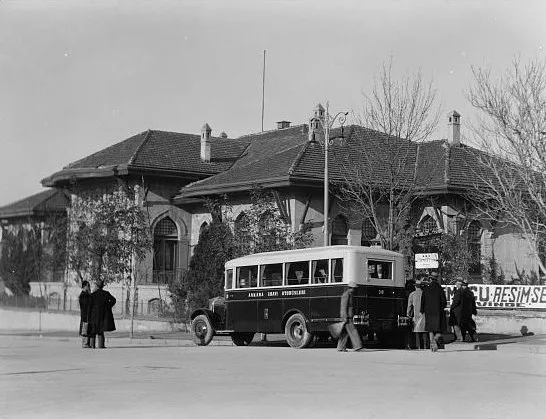
Photo: American Colony (Jerusalem). Photo Dept., photographer Date Created/Published: [1935], Public domain, via Wikimedia Commons
In Washington's foreign policy circles, Turkey tends to get discussed in one of two ways: as a frustrating ally that keeps doing inexplicable things, or as Erdoğan's personal geopolitical project. Both framings miss something important. Turkey is a country of 85 million people with deep institutional fault lines, competing power centers, and a political transition question that nobody in the State Department is publicly willing to ask out loud: what happens when Erdoğan is gone?
That question is no longer hypothetical speculation. It's active strategic planning — at least for the people inside Turkey who are already maneuvering for position. The rest of us should probably catch up.
The Succession Myth: There Is No Obvious Heir
One of the most persistent misunderstandings about Turkish politics in the Western press is the assumption that Erdoğan has a clear successor waiting in the wings. He doesn't. That's partly by design — strongman political systems rarely produce robust succession mechanisms, because the whole architecture is built around one person's authority — and partly a reflection of how thoroughly Erdoğan has managed to sideline potential rivals within the AKP itself.
Former Prime Minister Ahmet Davutoğlu is gone, having broken with Erdoğan to form his own party after a falling-out over the direction of Turkish foreign policy. Former Economy Minister Ali Babacan, once considered a potential technocratic successor, followed a similar path. Both men represent a faction of Turkish conservatism that is more pro-Western, more economically orthodox, and more interested in EU alignment than the current government. Their departures didn't eliminate that faction — they just pushed it outside the AKP's tent.
Inside the party, Vice President Cevdet Yılmaz and several other figures are often mentioned as potential transition candidates, but none commands the kind of personal loyalty network that Erdoğan has spent two decades building. The AKP without Erdoğan is a significantly weaker institution than the AKP with him. That vulnerability is itself a geopolitical variable.
Three Scenarios Washington Should Be War-Gaming
Scenario One: The Managed Transition
This is the optimistic case. Erdoğan, whether through electoral defeat, health considerations, or a calculated political decision, orchestrates a handover to a chosen loyalist — someone ideologically aligned with his vision of a sovereign, assertive Turkey but willing to smooth some of the sharper edges that have complicated NATO relations. Think of it as Erdoğanism without Erdoğan's personal combativeness.
For U.S. interests, this scenario is manageable but not transformative. Turkey would likely maintain its current posture: strategically ambiguous on Russia, transactionally engaged with the West, and protective of its autonomy on issues like arms purchases and regional diplomacy. The S-400 question doesn't go away. The F-35 exclusion doesn't automatically reverse. But the temperature in the room drops, and diplomatic channels become more functional.
Scenario Two: Opposition Victory and a Westward Tilt
A unified opposition coalition — something like the six-party alliance that nearly prevailed in 2023 — could produce a government with genuinely different foreign policy instincts. Figures like CHP leader Özgür Özel have signaled more interest in EU accession momentum and a recalibrated relationship with NATO partners.
For Washington, this is superficially the best-case scenario. But it comes with complications. A post-Erdoğan opposition government would inherit an economy with structural vulnerabilities, a military establishment with its own institutional interests, and a nationalist electorate that would punish any leader perceived as capitulating to Western pressure. The appetite for a wholesale foreign policy reversal is limited even among opposition voters. Expect evolution, not revolution.
More critically, a democratic transition in Turkey would require the United States to actually show up as a reliable partner — something that recent U.S. foreign policy behavior hasn't always demonstrated convincingly. If Washington wants a more Western-aligned Turkey, it needs to offer something worth aligning toward.
Scenario Three: Internal Fragmentation and Nationalist Escalation
This is the scenario that keeps Eastern Mediterranean strategists up at night. If the AKP fractures without a managed transition, the political vacuum could accelerate a competition between hardline nationalist factions — including elements of the MHP, the ultranationalist movement that has been a coalition partner — and more pragmatic conservative forces.
A Turkey dominated by maximalist nationalism, untethered from Erdoğan's occasional willingness to negotiate strategically, would be significantly harder to work with than the current government. Think less transactional ambiguity and more reflexive confrontation — with Greece, with Cyprus, potentially with U.S. interests in the broader region.
The Institutional Variable: It's Not Just About Personalities
American political analysis tends to focus on individual leaders because that's how U.S. politics works. Turkish politics has a similar personality-driven surface, but underneath it are institutional actors that will shape any transition regardless of who wins the next election.
The military's role in Turkish politics has been formally curtailed since the post-2016 coup attempt purges, but the institution retains enormous influence over defense policy, intelligence, and the country's posture in Syria, Iraq, and the Aegean. Any successor government will need to negotiate with — not simply command — the security establishment.
Similarly, the Turkish judiciary, the religious affairs directorate, and the state media apparatus are all institutions that have been reshaped in Erdoğan's image. They don't disappear with a change in government. They become battlegrounds.
For U.S. policymakers, the lesson is that Turkey's geopolitical alignment isn't simply a function of who sits in Ankara's presidential palace. It's a product of institutional culture, economic incentives, and a political geography that won't be rewritten by a single election cycle.
What the U.S. Actually Needs to Do
The honest answer is that Washington has been reactive on Turkey for years, and the bill is coming due. The relationship has drifted into a pattern of managed grievance — each side annoyed with the other, neither willing to do the work of genuine strategic realignment.
If the U.S. wants to position itself well for a post-Erdoğan Turkey, it needs to start now. That means investing in civil society relationships that extend beyond government contacts. It means taking EU-Turkey dynamics seriously, because European integration is ultimately the most powerful structural pull toward Western alignment. It means being honest about the ways American policy — on the Kurds, on arms sales, on strategic messaging — has complicated the relationship.
Most of all, it means treating Turkey as a country with its own legitimate interests and political complexity, not just a difficult ally to be managed or a problem to be solved when the current leader finally exits the stage.
The taxi driver in Istanbul doesn't think much about NATO's eastern flank. He's thinking about whether his next fare will cover his gas. But the political system that emerges from Turkey's coming transition will be built by people who share his frustrations — and shaped by whether the West proves itself worth trusting. That's not a geopolitical abstraction. It's the actual stakes.