Washington Finally Woke Up: Why Every US Strategist Needs to Understand Erdoğan's Playbook
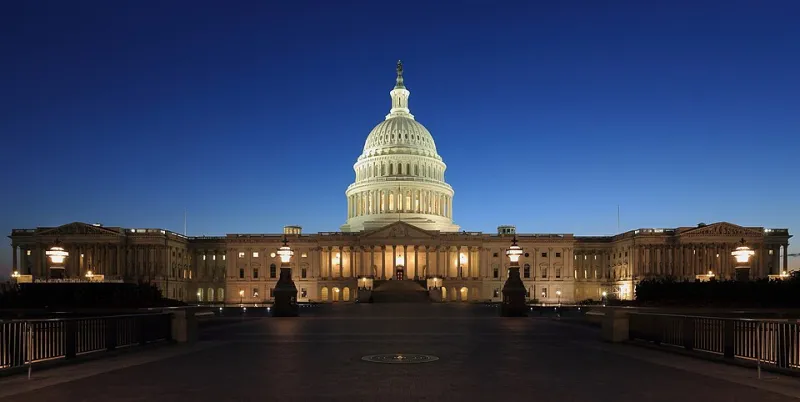
Photo: Martin Falbisoner, CC BY-SA 3.0, via Wikimedia Commons
For years, American foreign policy circles treated Turkey like a reliable but boring NATO ally — something you didn't have to think too hard about. Those days are over. From Syria's killing fields to the Eastern Mediterranean's gas-rich waters, Erdoğan's moves are landing directly on Washington's desk whether policymakers like it or not.
Here at Taksicinin Zemrediği, we've been watching this slow awakening from the sidelines with a mix of satisfaction and exasperation. Satisfaction, because Turkish politics matters and always has. Exasperation, because it took this long for the American foreign policy establishment to figure that out.
The F-35 Debacle That Changed Everything
Let's start where things really broke open: the S-400 purchase. When Ankara bought Russia's S-400 missile defense system in 2019, Washington reacted like someone who just discovered their trusted business partner had been moonlighting for the competition. Turkey was booted from the F-35 program, sanctions were threatened, congressional hearings were held — the whole circus.
But here's what that episode actually revealed: the United States had been operating under a dangerously outdated assumption that Turkey's NATO membership meant automatic alignment with Western interests. Erdoğan had been signaling for years that he was playing a different game — one where Turkey acts as a sovereign power maximizing its own leverage, not a loyal junior partner waiting for instructions from Brussels or Washington.
The S-400 wasn't an anomaly. It was a feature.
Syria: Where American and Turkish Interests Collide in Real Time
Nothing illustrates the complexity of US-Turkey relations quite like Syria. American strategists built their anti-ISIS campaign largely around the Syrian Democratic Forces (SDF), which is dominated by Kurdish YPG fighters. Ankara views those same fighters as an extension of the PKK — a group the US also designates as a terrorist organization, which is where the whole thing gets diplomatically awkward.
Turkey has launched multiple military operations into northern Syria — Operations Euphrates Shield, Olive Branch, and Peace Spring — each one sending tremors through US military planning in the region. American troops have found themselves in the uncomfortable position of being allies of both Turkey and the Kurdish forces Turkey is actively bombing. That's not a footnote in a policy brief; that's a fundamental contradiction at the heart of US Middle East strategy.
Every time Erdoğan threatens another cross-border operation, phones ring in the Pentagon. That's not metaphorical — that's the current reality of how entangled these two countries' strategic interests have become.
The Eastern Mediterranean Chessboard
If Syria is where the US-Turkey relationship gets messy on the ground, the Eastern Mediterranean is where it gets complicated in the water. Turkey's disputes with Greece and Cyprus over maritime boundaries and energy exploration rights have pulled in other NATO members and created fault lines within the alliance itself.
Greece and Cyprus are EU members. France has backed them aggressively — at one point French and Turkish naval vessels reportedly had a tense standoff in the Mediterranean. Meanwhile, the US has been trying to play diplomatic mediator while also deepening its defense relationship with Greece, including expanded access to Greek military bases.
For American strategists, this is a genuine headache. How do you maintain credibility with Athens while keeping Ankara from drifting further toward Moscow? How do you encourage energy independence for Europe — a major post-Ukraine priority — when Turkish maritime claims complicate the development of Eastern Mediterranean gas fields?
These aren't abstract geopolitical questions. They're showing up in congressional briefings and State Department cables with increasing frequency.
The Russia Variable: Erdoğan's Most Valuable Card
Perhaps the single most important reason Washington has sharpened its focus on Turkish politics is Erdoğan's carefully cultivated relationship with Vladimir Putin. While the rest of NATO was imposing sanctions on Russia following the 2022 invasion of Ukraine, Turkey declined to join the sanctions regime and continued buying Russian energy.
At the same time, Turkey provided Ukraine with Bayraktar drones that proved devastatingly effective on the battlefield and kept the Bosphorus and Dardanelles straits closed to warships — a move that actually limited Russian naval reinforcement from the Black Sea.
Erdoğan positioned Turkey as the indispensable mediator: hosting peace talks in Istanbul, brokering the Black Sea grain deal, maintaining open lines to both Kyiv and Moscow. For an American foreign policy community used to allies being clearly in one camp or the other, this was disorienting — and begrudgingly impressive.
The lesson? Turkey under Erdoğan doesn't fit neatly into Washington's binary frameworks. That makes it harder to manage and impossible to ignore.
What American Audiences Are Missing
Most US media coverage of Turkey falls into one of two categories: either it's a human rights story about press freedom and democratic backsliding, or it's a crisis story about some specific flashpoint. Both are legitimate, but neither gives American audiences the strategic picture.
What gets missed is the internal political economy driving Erdoğan's foreign policy moves. His nationalist base responds to assertions of Turkish sovereignty. His economic vulnerabilities — chronic inflation, currency instability — push him toward deals that generate revenue or diplomatic capital. His survival as a political leader depends on maintaining a delicate coalition that requires constant performance of strength.
Understanding why Erdoğan does what he does requires understanding Turkish domestic politics, not just reading his statements through a Washington lens.
That's exactly the gap this platform exists to fill. American strategists who want to anticipate Turkey's next move can't just read the Pentagon's briefings. They need to understand what the conversation looks like from inside Turkey — from the streets, the tea houses, and yes, from the taxis.
The Bottom Line for Washington
Turkey sits at the intersection of Europe, the Middle East, Central Asia, and the Black Sea. It controls critical maritime chokepoints. It has the second-largest military in NATO. And it's led by a politician who has shown, repeatedly, that he will use every piece of leverage available to advance Turkish interests as he defines them.
American policymakers who treat Turkey as a peripheral concern or a manageable nuisance are making a strategic error. The country's internal politics — who's rising, who's falling, what the opposition is doing, how the economy is affecting public sentiment — directly shapes the decisions that land on Washington's desk.
That's not just our opinion here at Taksicinin Zemrediği. That's increasingly the view inside the Beltway too. It just took them a while to catch up.