Fare Wars and Empty Wallets: What Istanbul's App Economy Tells Us About Erdoğan's Economic Blind Spots
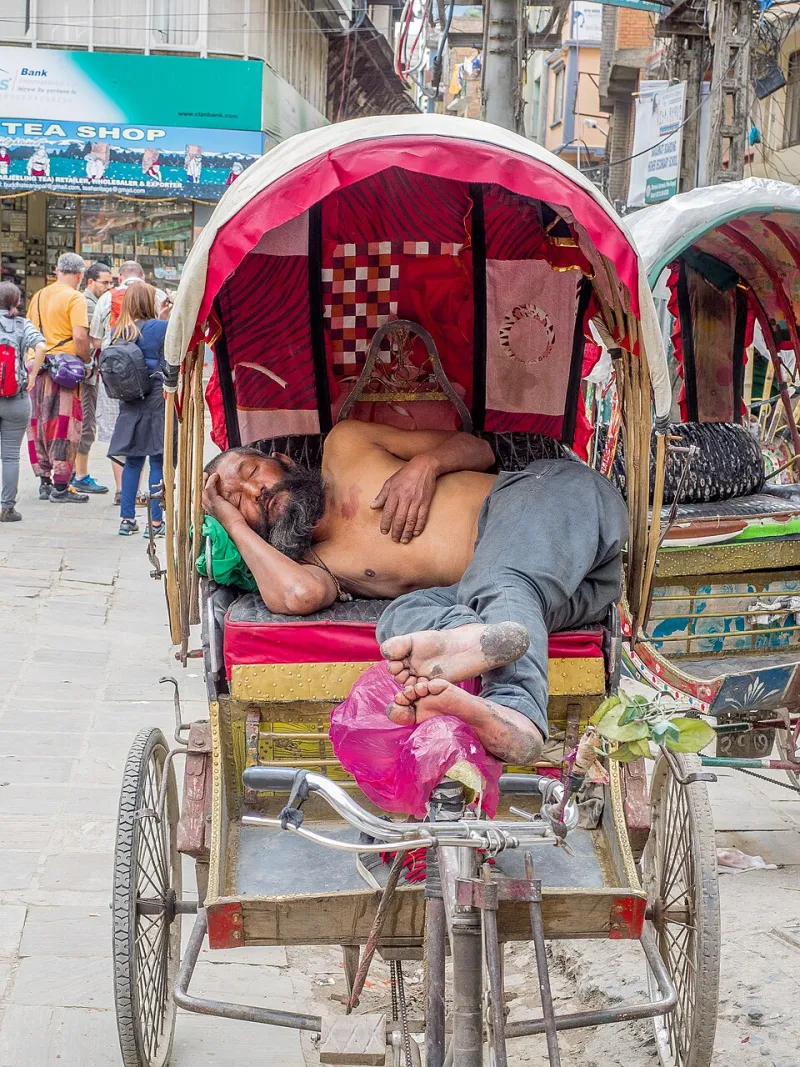
Photo: Esin Üstün from Istanbul, Turkey, CC BY 2.0, via Wikimedia Commons
There's a particular kind of exhaustion you see in the eyes of an Istanbul cab driver at two in the morning. It's not just fatigue from a long shift — it's the look of someone doing math in their head that doesn't add up, no matter how many times they run the numbers.
Mehmet, a 52-year-old taxi driver who has worked the Kadıköy-to-Taksim corridor for over two decades, put it plainly during a recent late-night conversation: "I used to own this route. Now I'm competing with a kid on a moped using three different apps at once, and neither of us is making rent."
Welcome to the new Turkish gig economy — chaotic, unregulated in all the wrong places, and quietly devastating for the working-class Turks that Erdoğan has spent years claiming to champion.
The App Invasion Nobody Planned For
When ride-sharing platforms began aggressively expanding into Turkish cities over the past several years, the government's response was characteristically muddled. Istanbul's iconic yellow taxis — long protected by a licensing system that kept numbers artificially low and medallion prices artificially high — suddenly found themselves flanked by a sprawling ecosystem of informal apps, motorcycle couriers doubling as passenger carriers, and hybrid services operating in legal gray zones.
The government initially tried to suppress the apps. Then it tried to regulate them. Then it sort of gave up and let the market do whatever the market was going to do, which in Turkey's current economic climate means: race to the bottom, fast.
BiTaksi, the locally developed alternative to Uber, operates under a framework that technically requires drivers to hold official taxi licenses. In practice, enforcement is spotty at best. Meanwhile, a constellation of smaller apps and informal WhatsApp-based dispatch networks have filled the gaps, particularly in working-class neighborhoods where yellow cabs rarely bother to venture.
For American readers, think of it like this: imagine if Uber, unlicensed gypsy cabs, and your cousin's informal carpool all competed simultaneously for the same fares, while the city government alternated between cracking down on one and ignoring the others, depending on which constituency needed appeasing that week. That's roughly the situation in Istanbul right now.
The Lira Problem Nobody Wants to Talk About
Here's where Erdoğan's economic fingerprints become impossible to ignore. Turkey's inflation crisis — driven in significant part by the government's insistence on keeping interest rates low against conventional economic wisdom — has gutted the purchasing power of ordinary workers. The lira has lost a staggering portion of its value over the past several years, and the people absorbing that hit most directly are exactly the kind of working-class urban Turks who once formed the backbone of AKP electoral support.
For gig workers, this creates a specific kind of torture. Fuel costs, which are priced in dollars on international markets, have soared in lira terms. Vehicle maintenance, often involving imported parts, has become financially punishing. Meanwhile, the fares that passengers are willing to pay — fares that are increasingly anchored by app-based price expectations — haven't kept pace.
Ali, a 34-year-old who drives for multiple platforms simultaneously while also running his own informal neighborhood taxi service, described his monthly budget with the kind of dark humor that Turks have perfected as a coping mechanism. "I work 14 hours a day. I make enough to cover the car payment, the fuel, and groceries. If nothing breaks, I'm fine. Something always breaks."
This is the street-level reality of what economists politely call "structural adjustment" — except in this case, the structure being adjusted is the financial stability of millions of families.
Populism's Accountability Gap
What makes this particularly relevant for American observers — especially those trying to understand how populist governments actually function beyond the rally speeches and social media — is the disconnect between official narrative and lived experience.
Erdoğan's government has consistently framed its economic policies as protective of ordinary Turks against foreign financial speculators and Western-aligned elites. The low-interest-rate policy was sold, explicitly, as a gift to working people — cheaper credit, more accessible loans, economic dynamism for the little guy.
But ask the little guy himself, and the story gets complicated fast. The cabbies aren't talking about macroeconomic theory. They're talking about whether they can afford to fix a transmission. They're talking about whether their kids' school supplies are going to wipe out a week's earnings. They're talking about neighbors who've abandoned formal employment entirely in favor of hustle-economy patchwork.
This is a pattern that US policymakers should study carefully, because it isn't unique to Turkey. Populist economic governance tends to generate exactly this kind of gap — between the loudness of the promises and the quietness of the suffering. The suffering doesn't announce itself at press conferences.
What the Dispatch Screen Doesn't Show
There's one more dimension to this story that deserves attention: the data invisibility of informal labor. When Turkey's government reports employment figures or economic growth statistics, the sprawling ecosystem of informal gig work exists in a kind of statistical shadow. Workers who have drifted out of formal employment and into app-based or WhatsApp-dispatched informal work aren't cleanly captured in unemployment numbers. They're employed, technically. They're just not making enough to live on, also technically.
This creates a political convenience for the government and an analytical blind spot for outside observers. Turkey's official unemployment numbers look manageable. The actual economic distress of urban working-class families looks considerably less manageable, if you're willing to get into a cab and ask.
Mehmet, back in his taxi on that late-night Kadıköy run, summed it up with the kind of clarity that no think-tank report quite captures: "They tell us the economy is growing. I ask: growing for who? Not for me. Not for anyone I know."
For anyone trying to understand Turkey — its politics, its foreign policy posture, its relationship with the United States — that question is worth sitting with for a while. The answer, heard from enough front seats, starts to sound less like an economic complaint and more like a political warning.