Stateside and Speaking Up: How Turkish-Americans Built the Opposition Ankara Couldn't Muzzle
Let's be honest about something: the most effective critics of Erdoğan's government aren't always the ones inside Turkey. They can't afford to be. A journalist in Istanbul who publishes the wrong story risks losing their press credentials, their freedom, or both. But a Turkish-American in Paterson, New Jersey? She can say whatever she wants, post it to YouTube, and there's nothing Ankara can do about it except seethe.
That asymmetry — between what's legally possible in Ankara and what's constitutionally protected in Akron — has quietly become one of the more interesting political dynamics of the Erdoğan era. The Turkish diaspora in the United States hasn't just been watching from afar. They've been building.
The First Amendment as Political Weapon
It sounds almost too simple when you say it out loud, but American free speech protections are genuinely extraordinary by global standards — and Turkish-Americans are using them with increasing sophistication. We're talking about a community that has, over the past decade, produced a sprawling ecosystem of newsletters, YouTube channels, Twitter accounts, Substack publications, and podcast networks that collectively document things that are either undercovered or actively suppressed inside Turkey.
Some of this content is amateur. Some of it is deeply reported. All of it is, legally speaking, untouchable by Turkish authorities.
Take the documentation of post-2016 purges. After the coup attempt, the Erdoğan government dismissed or arrested more than 150,000 people — academics, military officers, judges, teachers. Inside Turkey, detailed public accounting of individual cases became dangerous. But diaspora researchers in the US started building databases, cross-referencing names, publishing timelines. The Arrested Lawyers Initiative, the Stockholm Freedom of Expression Center, human rights researchers at American universities — many of them connected to or informed by diaspora networks — produced records that Turkish state media simply refused to generate.
Ankara doesn't love this. But there's no lever to pull.
More Than Just Venting Online
It would be easy to dismiss diaspora activism as the political equivalent of yelling into the void — emotionally satisfying, structurally irrelevant. That reading misses what's actually happening.
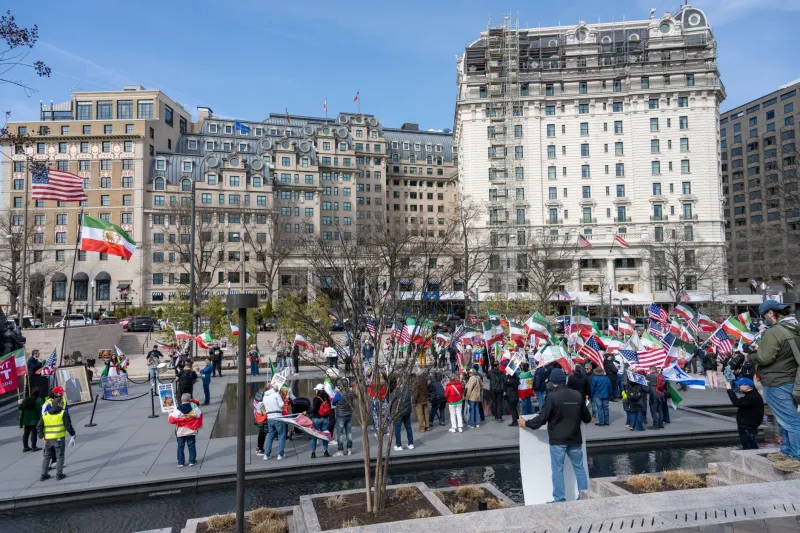
Turkish-American communities, particularly in major metro areas like New York, Houston, and the DC corridor, have developed genuine institutional infrastructure. There are advocacy organizations that brief congressional staffers. There are lawyers who advise Turkish nationals on asylum claims. There are academics who submit testimony to State Department human rights reports. There are journalists who publish in both English and Turkish, deliberately bridging the gap between American accountability mechanisms and Turkish political reality.
That bridging function is the key thing. When a Turkish dissident needs to get their story into a format that American policymakers will actually read, diaspora networks often provide the translation — not just linguistic, but cultural and contextual. They explain why a particular court case matters, why a specific media shutdown is significant, why a provincial election result tells you something about national political trends.
Washington doesn't always listen. But it listens more than it used to.
The Generational Shift
Here's where it gets interesting for the longer term. First-generation Turkish immigrants often have complicated feelings about public opposition to the government back home. Family is still there. Property is still there. The emotional math of diaspora life is genuinely difficult, and it doesn't always resolve in favor of loud political engagement.
But second-generation Turkish-Americans — people who grew up here, went to American schools, absorbed American political culture — have a fundamentally different relationship to that calculus. They're not less Turkish. But they're also fully American, and American political culture has a very low tolerance for the idea that you should stay quiet about injustice because it's complicated.
Watch the social media accounts of young Turkish-Americans and you'll see something that would have been unusual a generation ago: fluent, confident, bilingual political commentary that doesn't hedge. They're not worried about a visa renewal. They're not managing a business relationship with a Turkish government contractor. They're citizens with opinions and platforms, and they're using both.
What Ankara Actually Fears
Here's the thing about authoritarian governments and diaspora critics: the critics are annoying, but they're manageable as long as they stay in the margins. What becomes genuinely threatening is when diaspora voices gain credibility with the host country's institutions.
Ankara's real concern isn't a YouTube channel with 50,000 subscribers. It's a Turkish-American academic who testifies before the Senate Foreign Relations Committee. It's a diaspora-funded report that gets cited in a State Department human rights assessment. It's a Turkish-American journalist whose work influences how American editorial boards think about Turkey's NATO role.
That's the pipeline that's slowly being built. And it's being built precisely because the First Amendment makes it possible in ways that nothing inside Turkey currently allows.
The taxi driver back in Istanbul might have a lot to say about all of this. He just can't say it as loudly as his cousin in Queens.